
Every vehicle sold at a dealership completes a supply chain journey that begins on a factory floor and ends in a customer's driveway. That journey — from the point of final assembly through distribution, compound staging, rail or truck transport, and dealer delivery — falls under the operational discipline known as finished vehicle logistics (FVL).
It's a specialized field with its own infrastructure, terminology, carrier networks, and operational requirements. And it's fundamentally different from general freight logistics, even though the two disciplines share surface-level similarities. Understanding what FVL is, how it works, and why the distinction from general freight matters is essential for anyone involved in automotive supply chain procurement, OEM distribution planning, or fleet logistics management.
Defining Finished Vehicle Logistics
Finished vehicle logistics encompasses all transportation, storage, and handling activities associated with assembled passenger, commercial, and specialty vehicles moving through the post-manufacturing distribution chain.
The scope includes:
- Plant-to-compound transport — moving vehicles from assembly facilities to regional distribution compounds or rail terminals
- Rail transport — long-haul vehicle movement via automotive rail carriers (autorack cars) that carry multiple vehicles per rail car
- Driveaway services — moving vehicles under their own power, driven by professional driveaway operators over long or short distances
- Compound operations — staging, inspection, pre-delivery reconditioning, and holding operations at regional distribution points
- Dealer delivery — final-mile transport from regional compounds or direct from plants to dealership lots
- Port operations — import/export vehicle processing, including customs staging and port compound management
The Council of Supply Chain Management Professionals (CSCMP) defines logistics management as the part of supply chain management that plans, implements, and controls the efficient flow and storage of goods between the point of origin and the point of consumption — a definition that takes on added complexity in the finished vehicle context, where individual cargo value, physical dimensions, and handling sensitivity require competencies not present in general logistics providers.
The Scale of the Industry
The numbers establish context. New-vehicle sales in the U.S. reached 16.3 million units in 2025, according to Cox Automotive's Kelley Blue Book estimates — the best result since 2019. Cox Automotive Every one of those vehicles — plus used inventory, fleet moves, and auction transfers — moves through some portion of the FVL network.
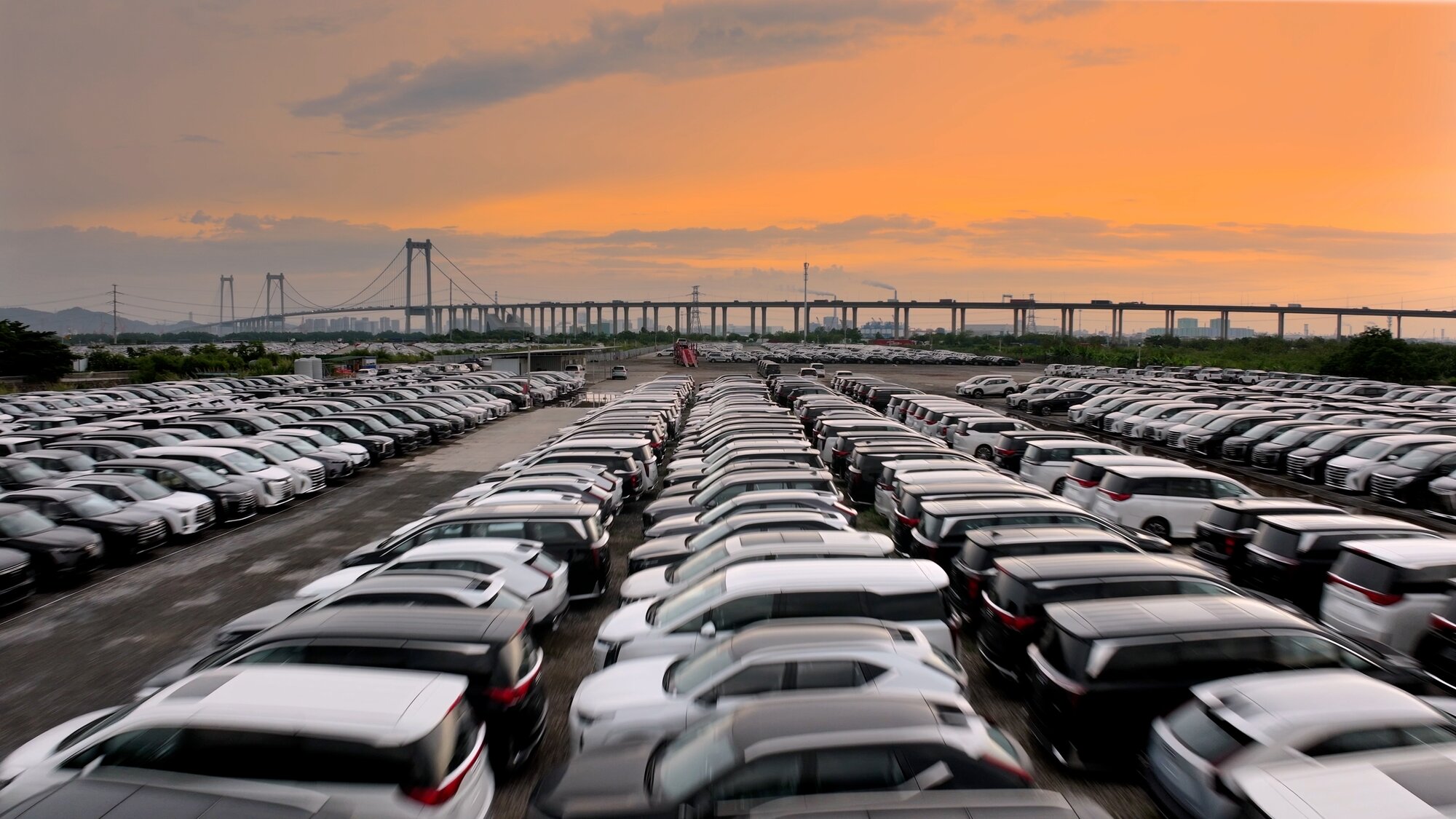
The infrastructure built around this volume is substantial: approximately 75 automotive rail compounds across North America, dedicated autorack rail fleets operated by Class I carriers, a specialized over-the-road carrier network of auto haulers, and a distributed driveaway driver network that can move individual vehicles across any distance.
Managing this infrastructure requires coordination across multiple transport modes, carrier relationships, compound operators, and regulatory environments. It's operationally demanding in ways that general freight management is not.
How FVL Differs from General Freight Logistics
This is a distinction that matters for procurement teams who may be evaluating logistics providers without deep FVL background. The surface similarity — moving goods from point A to point B — obscures operational differences that are significant.
Cargo Characteristics
Finished vehicles are non-stackable, high-value, and sensitive to handling in ways that standard freight is not. A $45,000 SUV that arrives at a dealer with a hood ding, paint scuff, or door edge chip has a measurable impact on dealer satisfaction and may require PDI correction work that delays retail availability.
General freight is typically rated and handled by weight class and density. FVL is governed by vehicle type, clearance requirements, body configuration, and value — none of which appear in standard freight rating systems.
Carrier Specialization
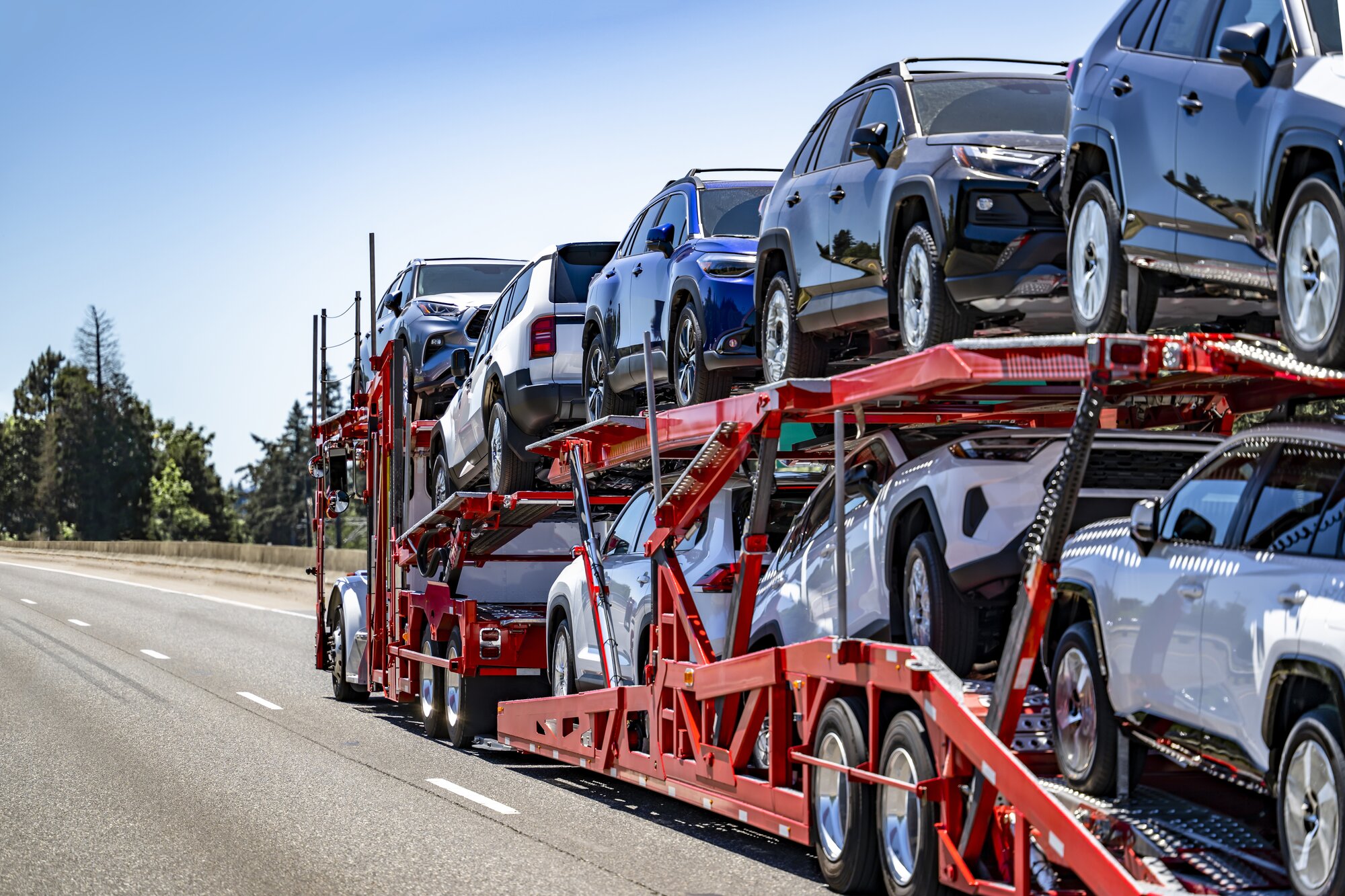
Auto haulers — the multi-level trailers that carry seven to ten vehicles per load on the open highway — are specialized equipment. Drivers require specific training in loading sequence, tie-down technique, and vehicle handling. The carrier network is distinct from general freight carriers and operates under its own rate structures, lane economics, and capacity dynamics.
Rail movement via autorack requires coordination with Class I carriers (BNSF, Union Pacific, CSX, Norfolk Southern) under dedicated automotive rate agreements. This isn't spot-market freight — it's a contracted, capacity-managed relationship that requires automotive-specific logistics expertise.
Regulatory Environment
The FMCSA's hours-of-service regulations govern the maximum time commercial vehicle drivers are permitted to be on duty, including driving time FMCSA — and auto haulers operate under these requirements just as all commercial carriers do. The operational constraints are amplified in FVL, however, where load value is high and delivery windows are contracted by OEM distribution agreements. Compliance requirements, carrier qualification standards, and safety monitoring are managed differently in the FVL context than in general freight.
Damage Visibility and Claims Management
In general freight, damage is tracked as a percentage of shipments and managed at the cargo level. In FVL, individual vehicle condition is tracked from plant departure through dealer receipt. Each vehicle has a VIN-level audit trail. Damage claims in finished vehicle logistics require documentation at the individual vehicle level, governed by the AIAG-ECG Global Standard Damage Codes — a joint framework developed by the Automotive Industry Action Group and the Association of European Vehicle Logistics to standardize how transport damage is inspected, recorded, and transmitted across the distribution chain. Ecgassociation
This VIN-level accountability doesn't exist in general freight and requires technology and process infrastructure that FVL-specialized providers maintain and general logistics providers typically don't.
The Key Players in the FVL Ecosystem
Understanding FVL means understanding the network of operators who make it work:
OEM distribution teams — the internal logistics functions at vehicle manufacturers responsible for planning distribution from plants to markets. They set delivery timelines, manage carrier contracts, and monitor dealer satisfaction metrics.
Third-party logistics providers (3PLs) in FVL — specialized companies that manage all or portions of the post-plant distribution network on behalf of OEMs. RPM Logistics operates in this role, managing carrier relationships, compound operations, and delivery coordination across the national network. Learn more about RPM's OEM vehicle distribution programs.
Auto haulers — the over-the-road carriers who operate multi-level trailers. This is a fragmented market; the largest operators carry a meaningful share of volume but the network includes hundreds of regional and specialty carriers.
Rail carriers — Class I railroads operate autorack equipment as a dedicated automotive service. Long-haul plant-to-region moves are often rail-primary, with truck for final-mile distribution.
Driveaway operators — individuals and fleet operators who move vehicles under their own power. This mode is particularly used for medium-distance moves, specialty vehicles, or situations where rail or truck availability is constrained.
Compound operators — facilities that handle staging, inspection, reconditioning, and storage between plant departure and dealer delivery. Compound efficiency directly affects pipeline time and dealer delivery performance.
Why the Distinction Matters for Procurement
When an OEM or fleet operator selects a logistics partner without understanding the FVL/general freight distinction, the results are predictable: higher damage rates, poorer delivery performance, and a claims experience that doesn't reflect automotive industry standards.
General freight 3PLs lack the carrier relationships, compound access, rail coordination capability, and VIN-level tracking infrastructure that FVL requires. They can quote competitively on rate because they're not building the same operational infrastructure — and the gap shows in execution.
The procurement criteria for FVL should reflect the specialized requirements:
- Automotive-specific carrier network coverage and depth
- Rail coordination capability for long-haul lanes
- VIN-level tracking and exception management
- Damage rate benchmarks against automotive industry standards
- Compound and staging capability at key regional nodes
- Experience with OEM distribution requirements and dealer delivery standards
RPM Logistics operates as a finished vehicle logistics provider with the OEM and dealer network infrastructure these requirements demand — not a general freight operator extending into automotive.
Contact the RPM team to discuss your FVL requirements →