Lithium batteries ship as Class 9 dangerous goods. Every shipment must meet packaging, marking, documentation and state-of-charge rules before a carrier will accept it. The guides in this section explain those rules for commercial shippers.
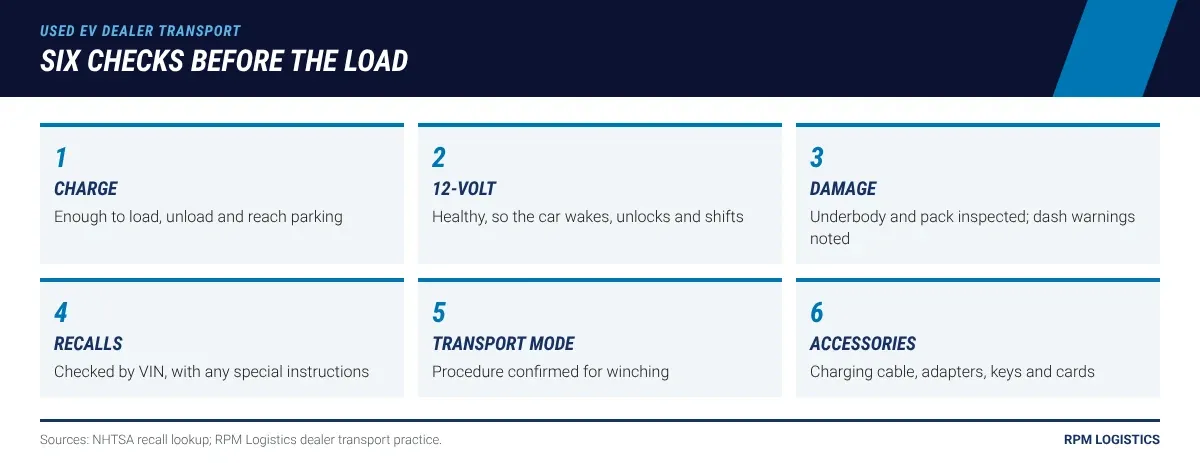
How dealers ship used EVs: charge level, the 12-volt battery trap, pack damage, recalls, transport mode, battery health records and auction and retail handoffs.
30 Oct 2026
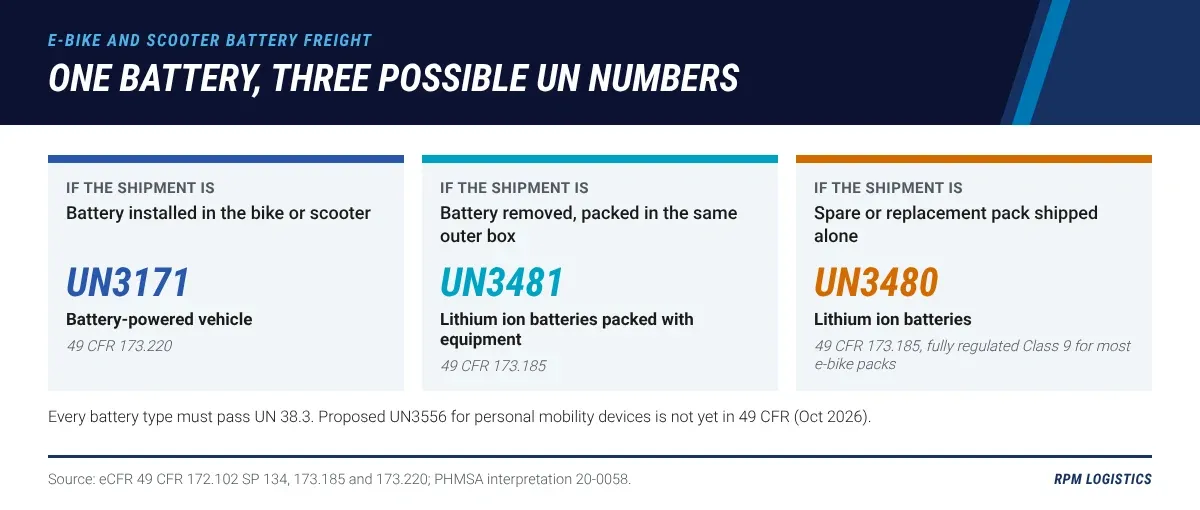
Shipping e-bike batteries and scooters by ground: when to use UN3171, UN3481 or UN3480, Wh exceptions, damaged packs, returns and rule changes to watch.
15 Oct 2026
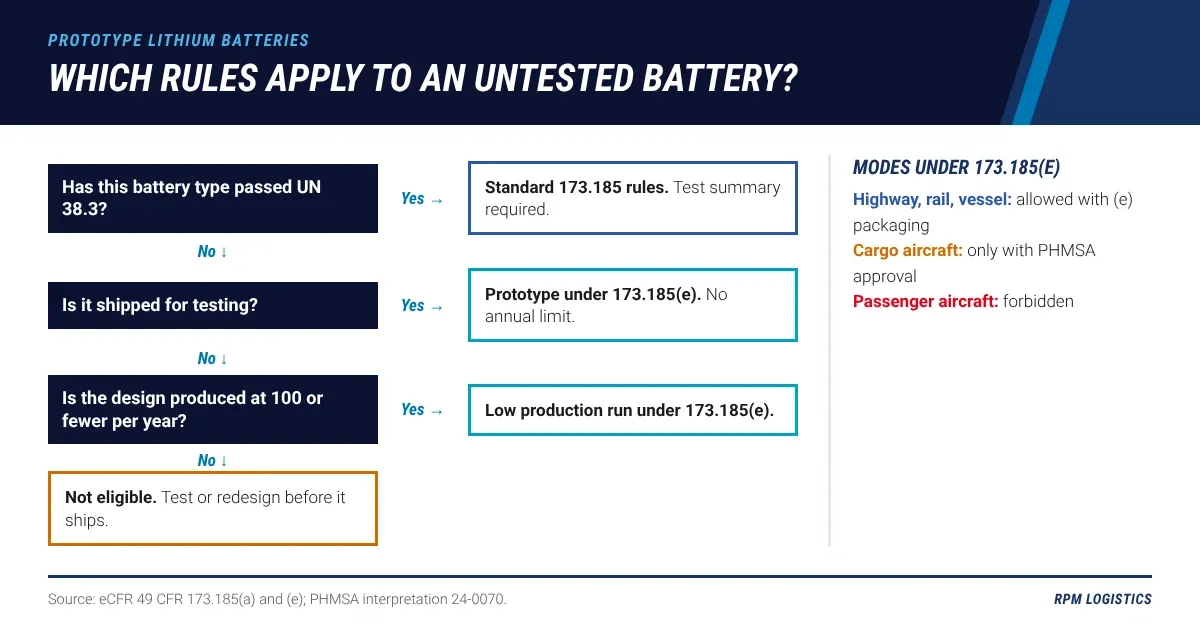
How to ship prototype and low production lithium batteries by ground under 49 CFR 173.185(e): who qualifies, packaging, air limits and shipping papers.
09 Oct 2026
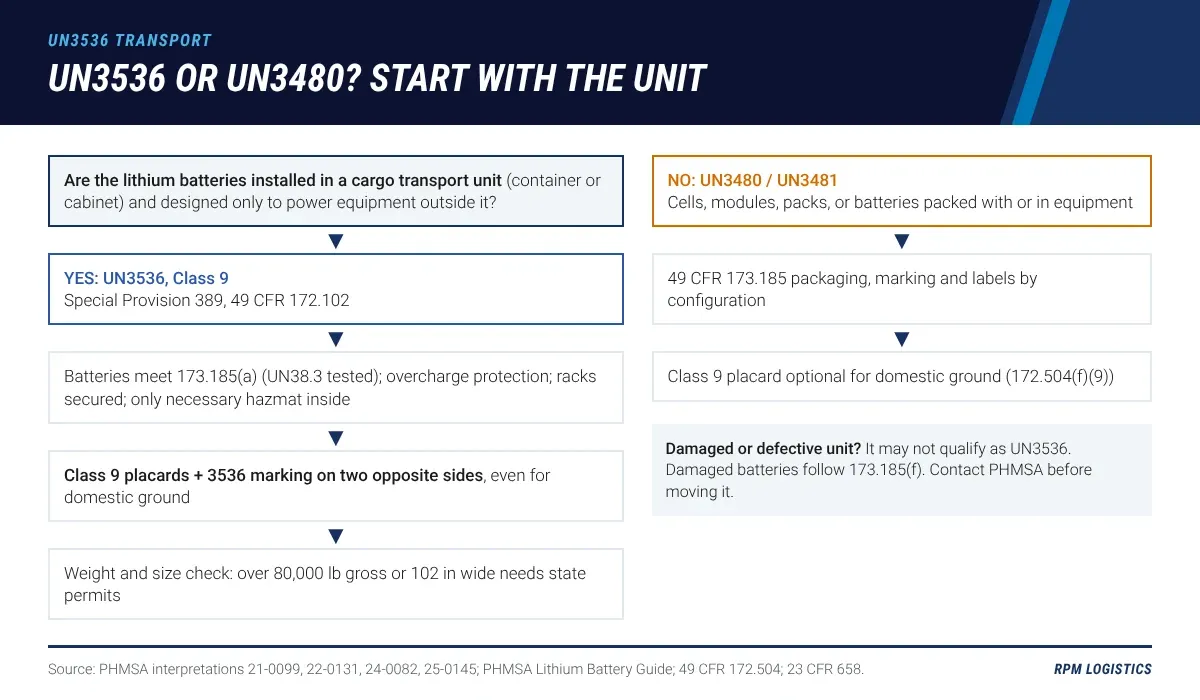
How to ship UN3536 battery energy storage systems by truck: Special Provision 389, Class 9 placards, the endorsement question, weight permits and damaged units.
04 Oct 2026
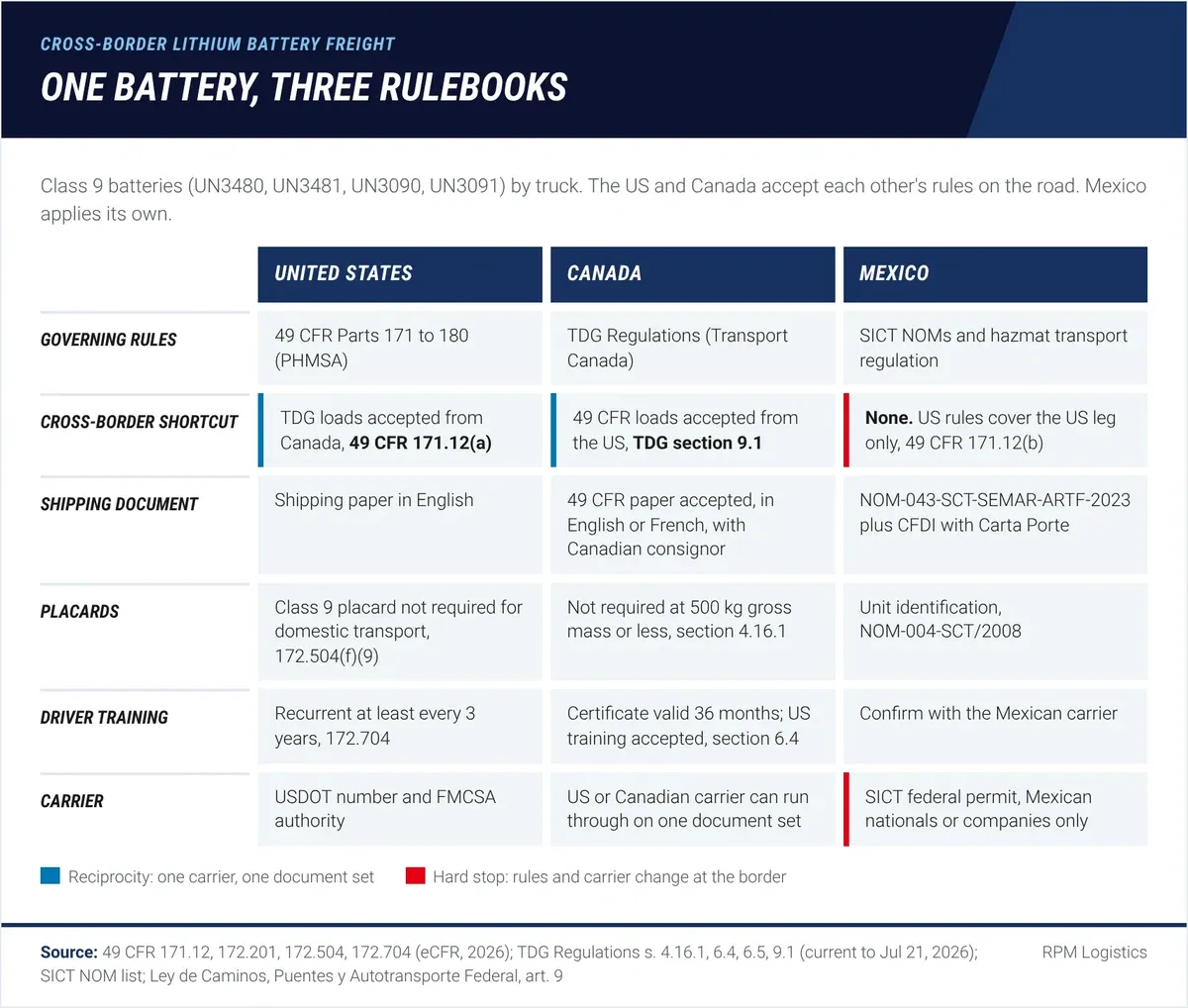
Cross-border lithium battery shipping by truck: how TDG section 9.1, 49 CFR 171.12, Mexican NOMs and the Carta Porte apply to US, Canada and Mexico loads.
21 Sep 2026
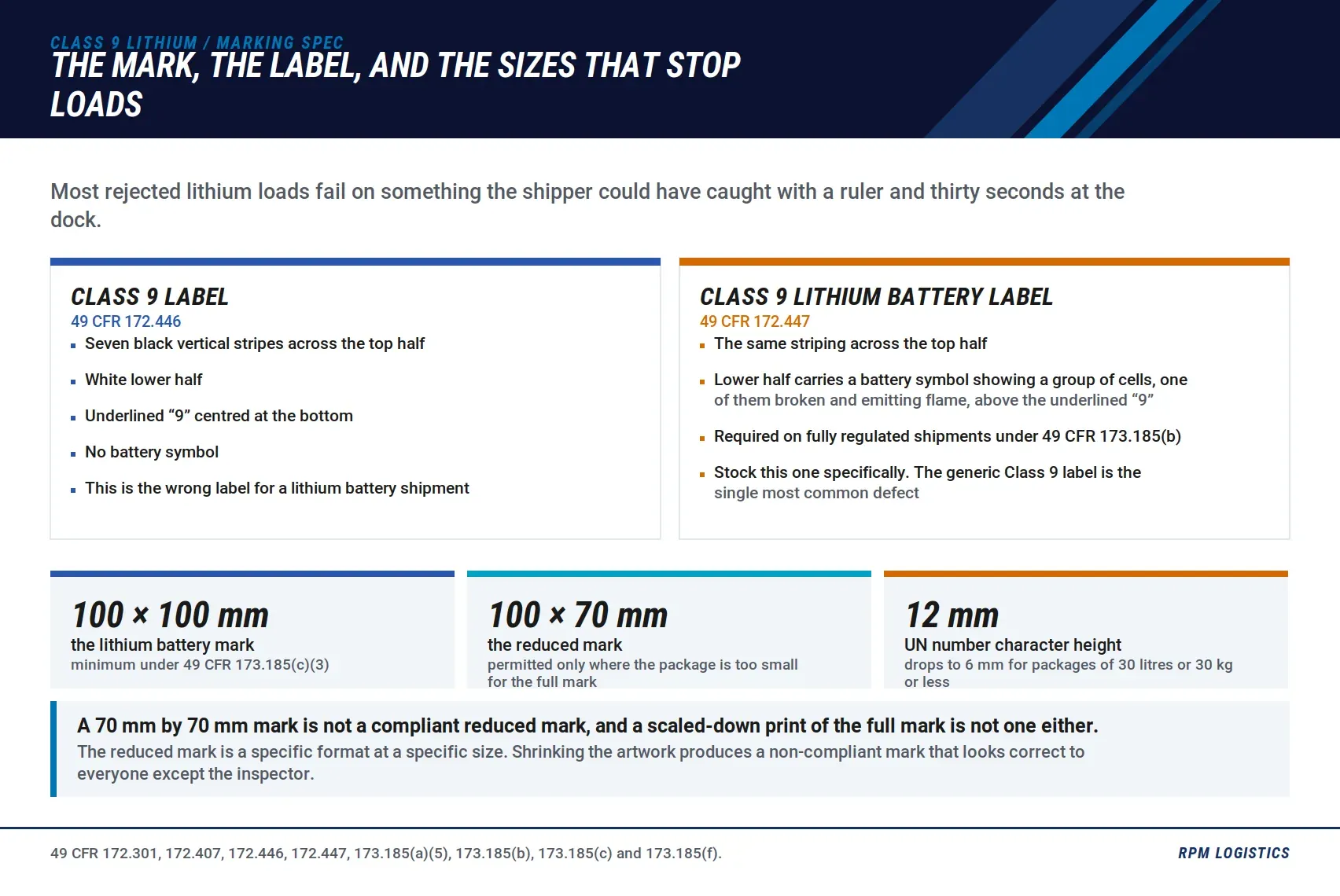
The observable marking and labelling defects that get lithium battery shipments refused, each with the regulation it breaches and the fix, plus what enforcement actually costs and the December 31, 2026 mark deadline.
10 Sep 2026
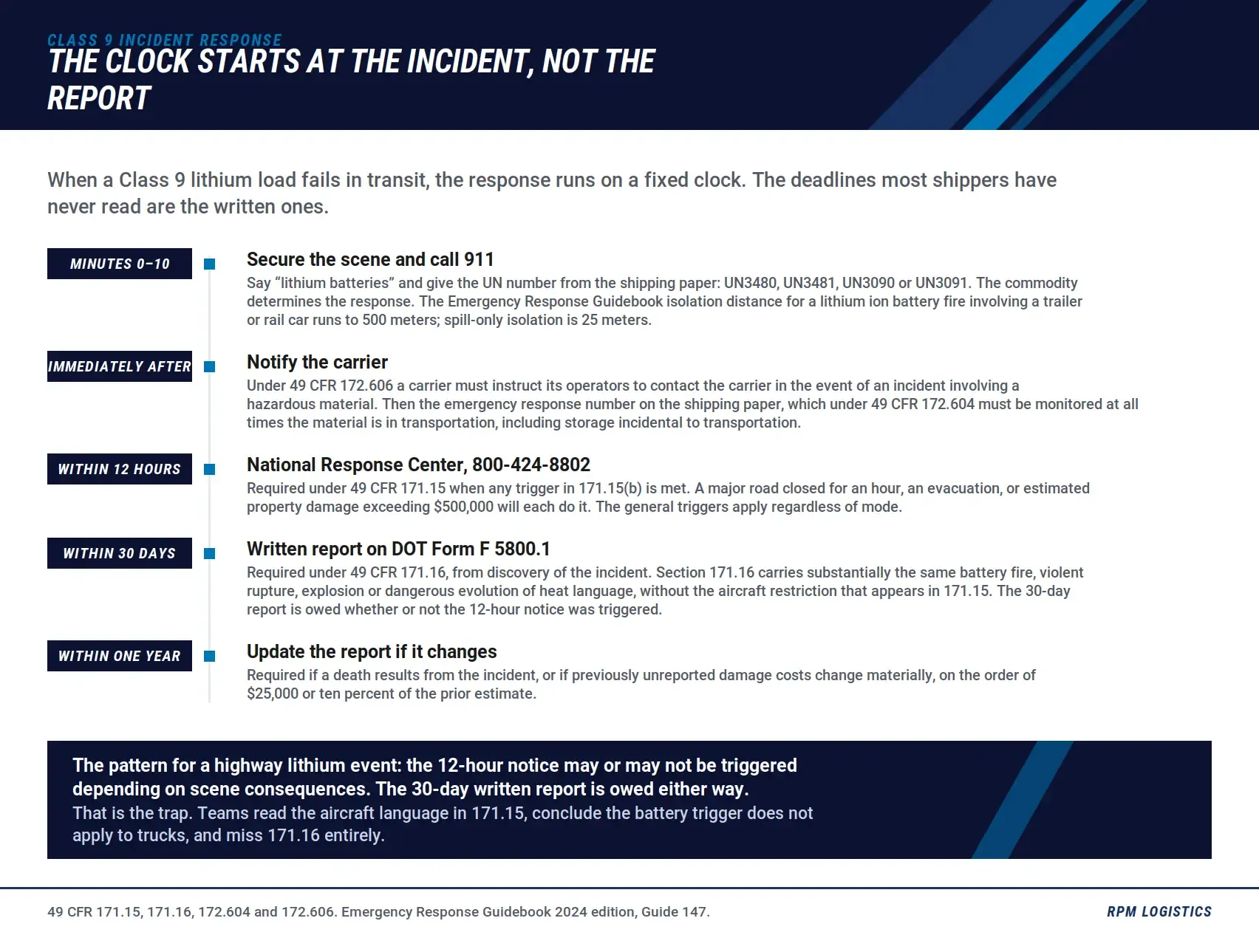
The federal response sequence for a lithium battery incident in surface transport: scene actions, the notification order, the 12-hour National Response Center trigger, the 30-day DOT Form 5800.1 report, and the emergency number requirements most programs fail.
09 Sep 2026
How international lithium battery shipments comply with the IATA DGR 67th Edition and IMDG Amendment 42-24, including the 2026 state-of-charge mandate, UN number selection, air section limits, and export documentation.
21 Aug 2026
A decision guide for choosing between LTL and full truckload for Class 9 lithium battery freight, covering volume, cost per unit, handling touches, segregation, DDR loads, and consolidation.
16 Aug 2026
There is no flat rate for Class 9 lithium battery freight. A driver-by-driver breakdown of what sets the price and how commercial and bulk shippers control it.
14 Aug 2026
They cover moves by ground, rail, air and ocean. Key topics include 49 CFR 173.185, UN38.3 test summaries, and IATA and IMDG requirements. Cross-border guides cover shipments into Canada and Mexico.
Other guides cover the hardest shipments. These include damaged, defective and recalled batteries, EV battery packs and end-of-life batteries headed to recycling. Storage guidance covers warehouses under NFPA 855.
Broader hazmat articles explain DOT hazard classes and placarding. They also cover how to choose a hazmat carrier.
Each guide focuses on what a shipper must prepare, document and confirm. The goal is a load that is not rejected at the dock or delayed in transit.
New to battery freight? Start with the lithium battery transport compliance guide for shippers. Then use the topic guides for the step you are working on.
RPM North America
205 Hamilton Row, Suite 200,
Birmingham, MI 48009
+1 855 585 1910