Cargo security is the set of checks that keeps freight and vehicles from being stolen, misdirected or released to the wrong carrier. The guides in this section explain how those risks work and how to reduce them.
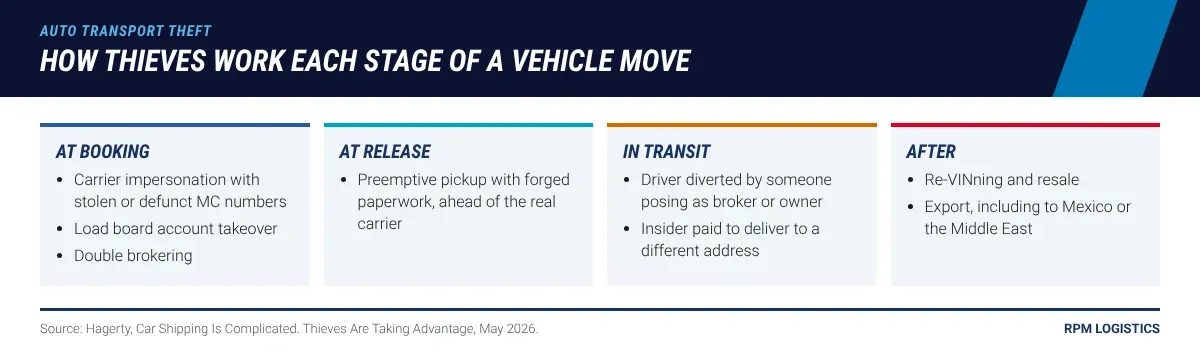
How auto transport theft works: carrier impersonation, double brokering, fictitious pickups and diversion, where finished vehicles are most exposed, and checks.
25 Oct 2026
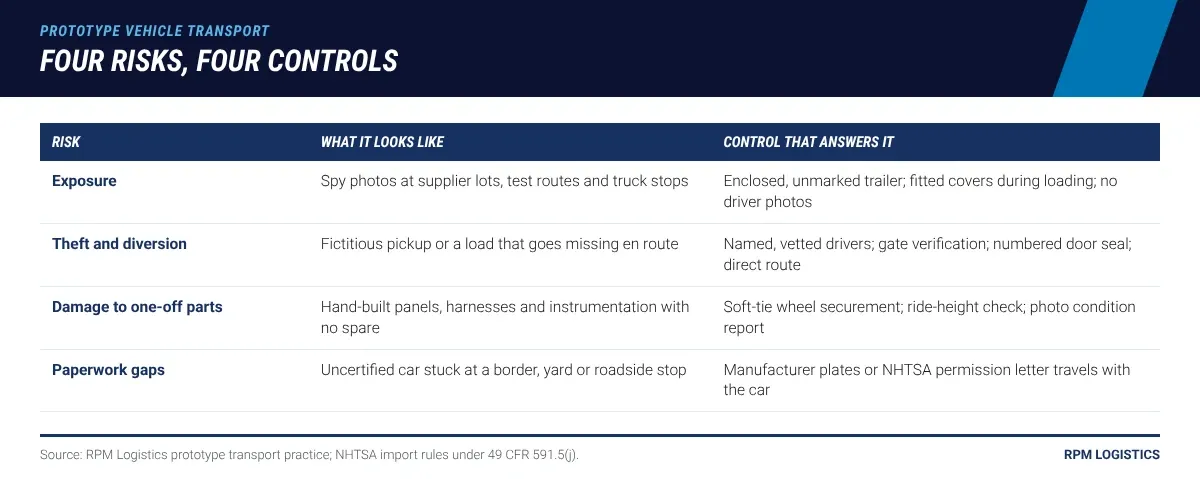
How to ship prototype and pre-production vehicles: security controls, soft-tie handling, NHTSA 591.5(j) import rules, mode choice and test-slot planning.
16 Oct 2026
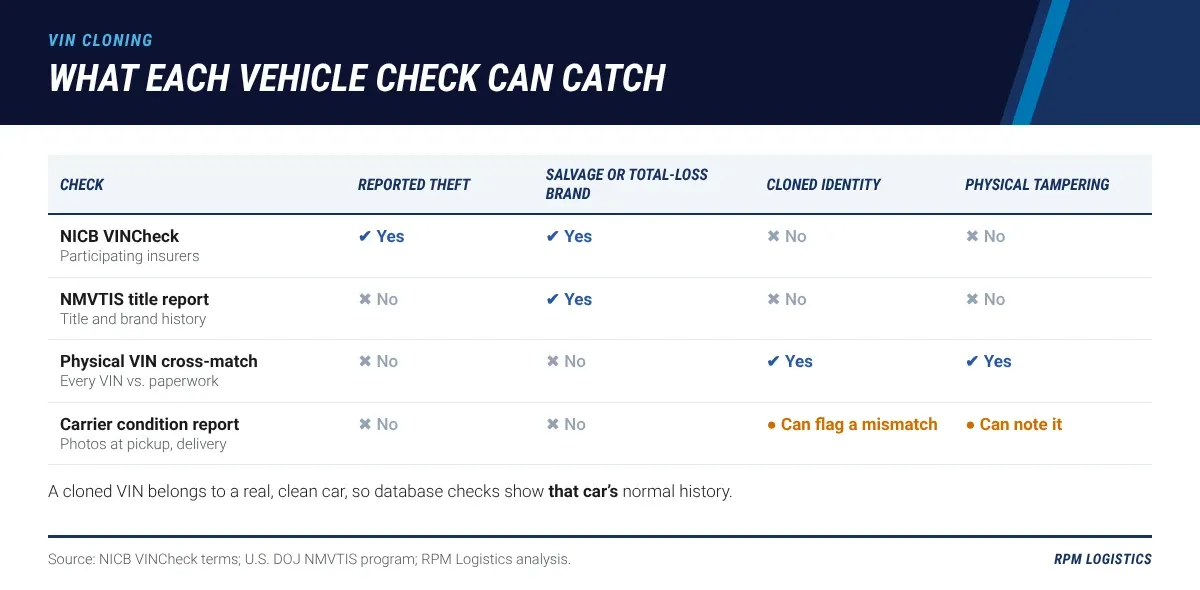
What VIN cloning is, how thieves copy a legal VIN onto a stolen car, what VIN checks can and cannot catch, and how shippers verify VINs at pickup and delivery.
07 Oct 2026
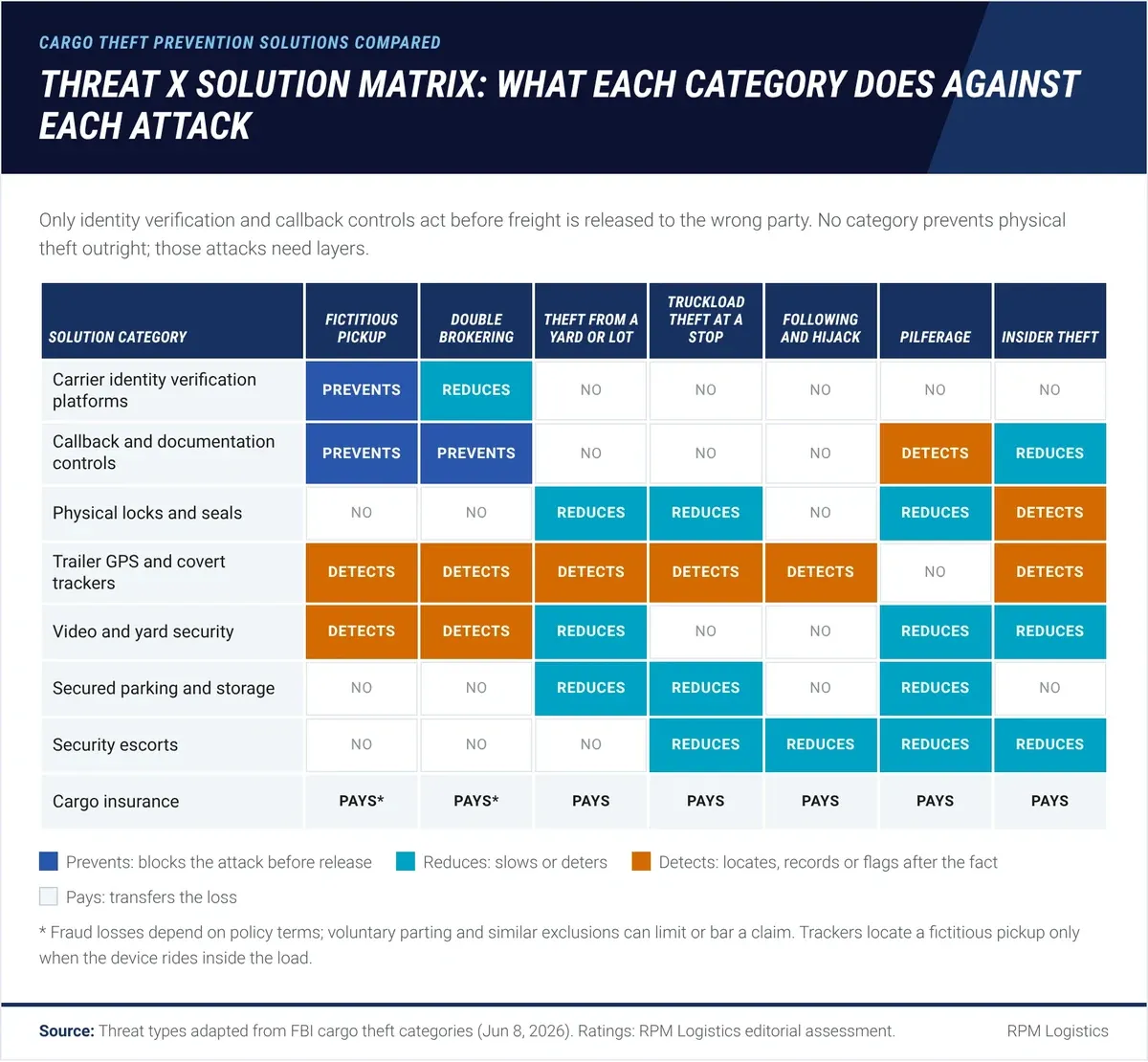
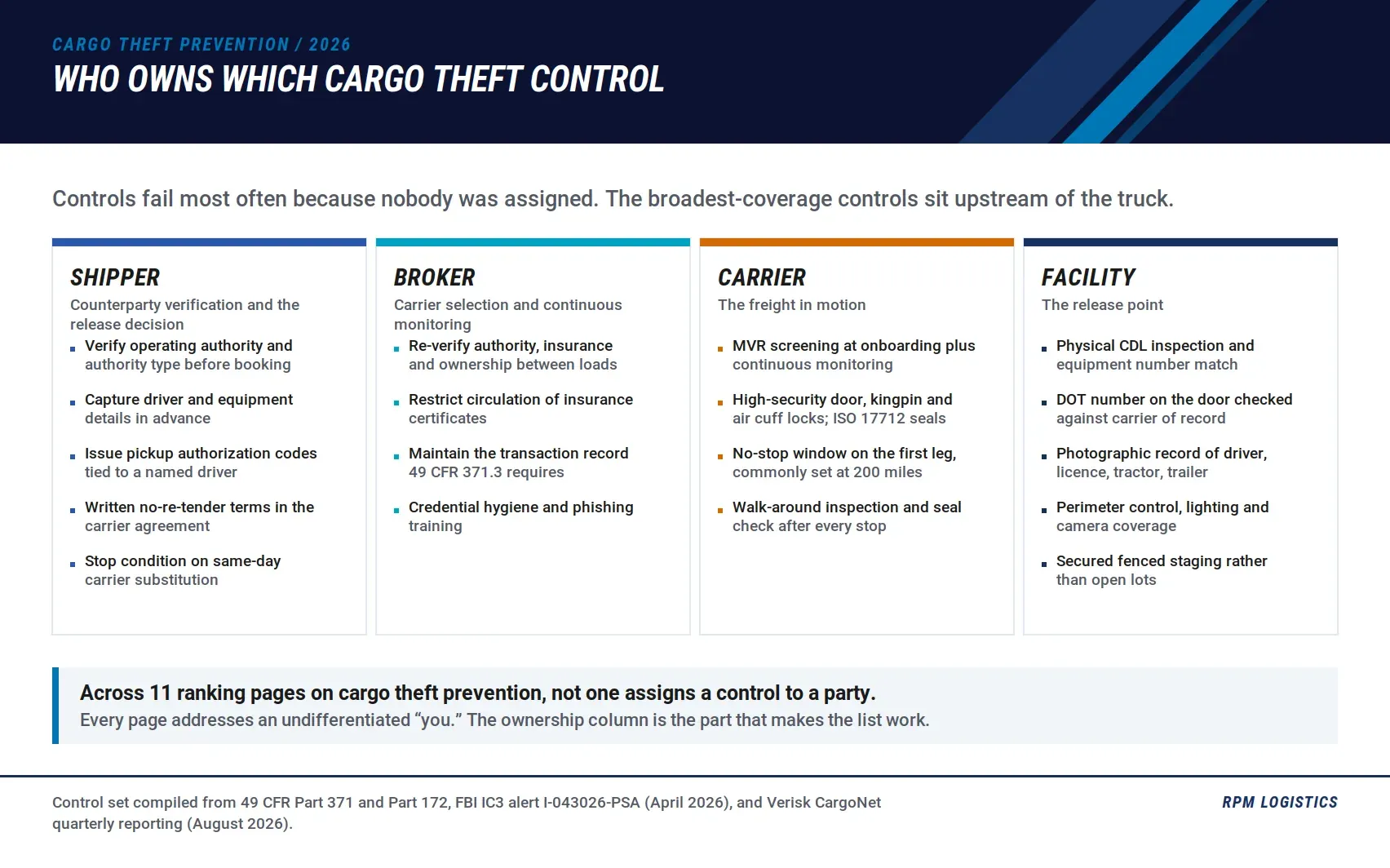
Eight cargo theft prevention solutions compared against seven attacks: what each one prevents, what it does not stop, and what it costs to run.
27 Sep 2026
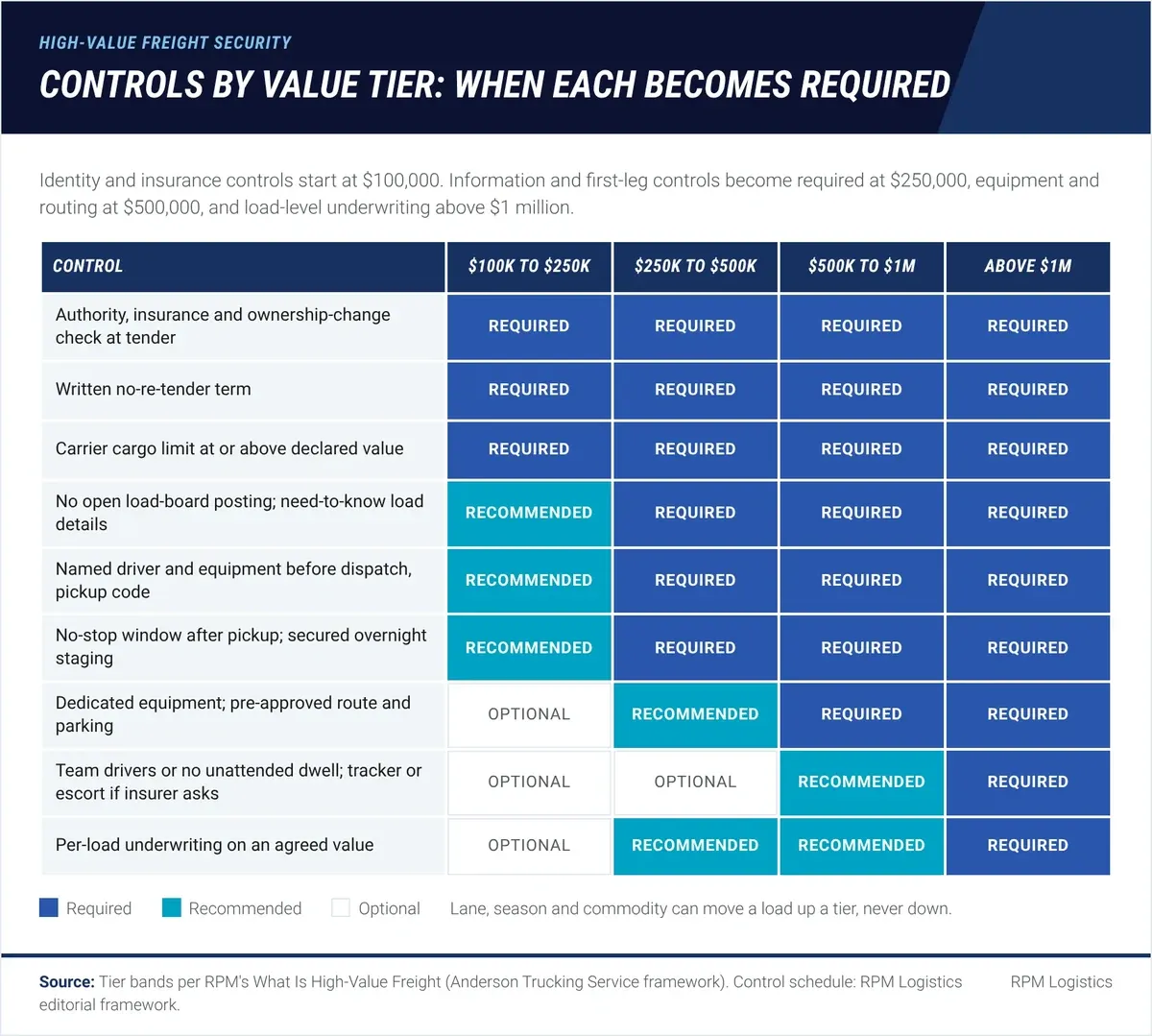
High value freight security by value tier and load phase: which controls become required at $100K, $250K, $500K and $1M, with 2026 theft data.
23 Sep 2026
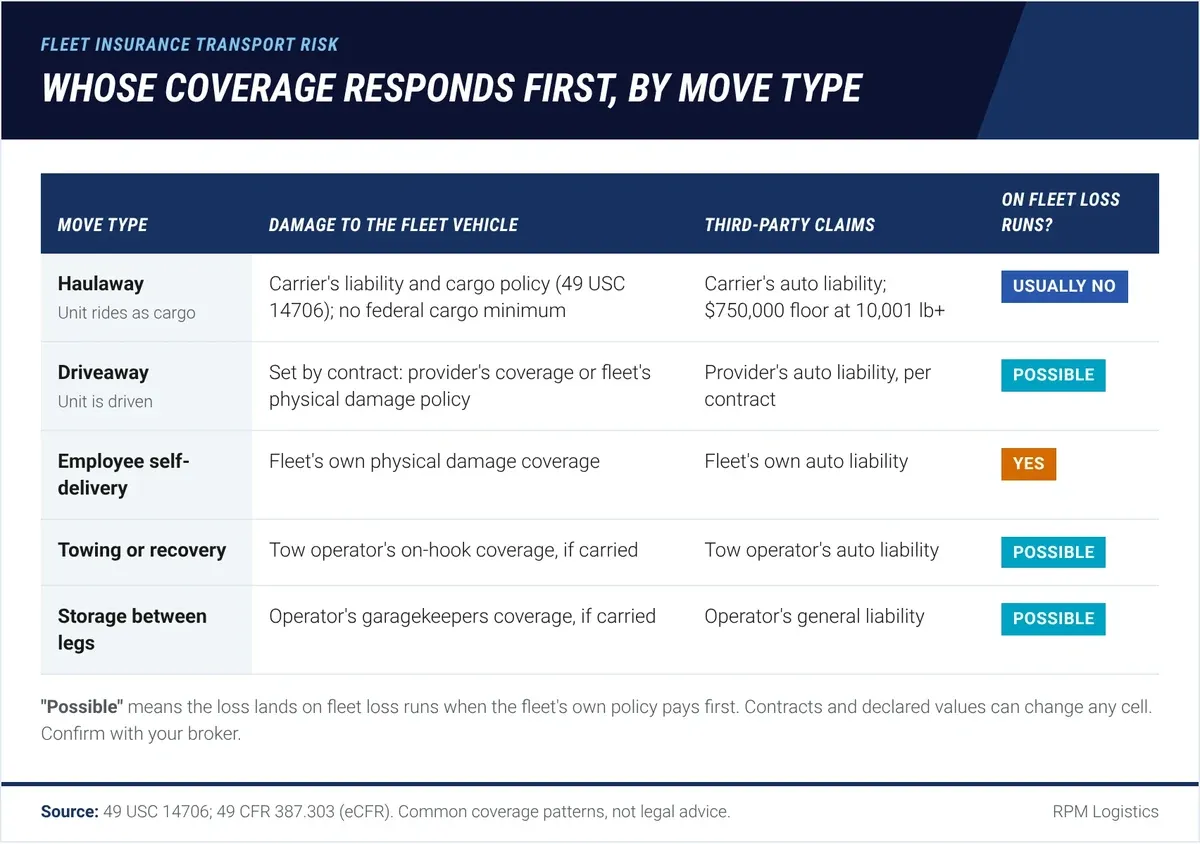
How fleet vehicle moves reach your insurance: which policy responds by transport mode, how transit losses land on loss runs, and the claim clocks fleets own.
22 Sep 2026
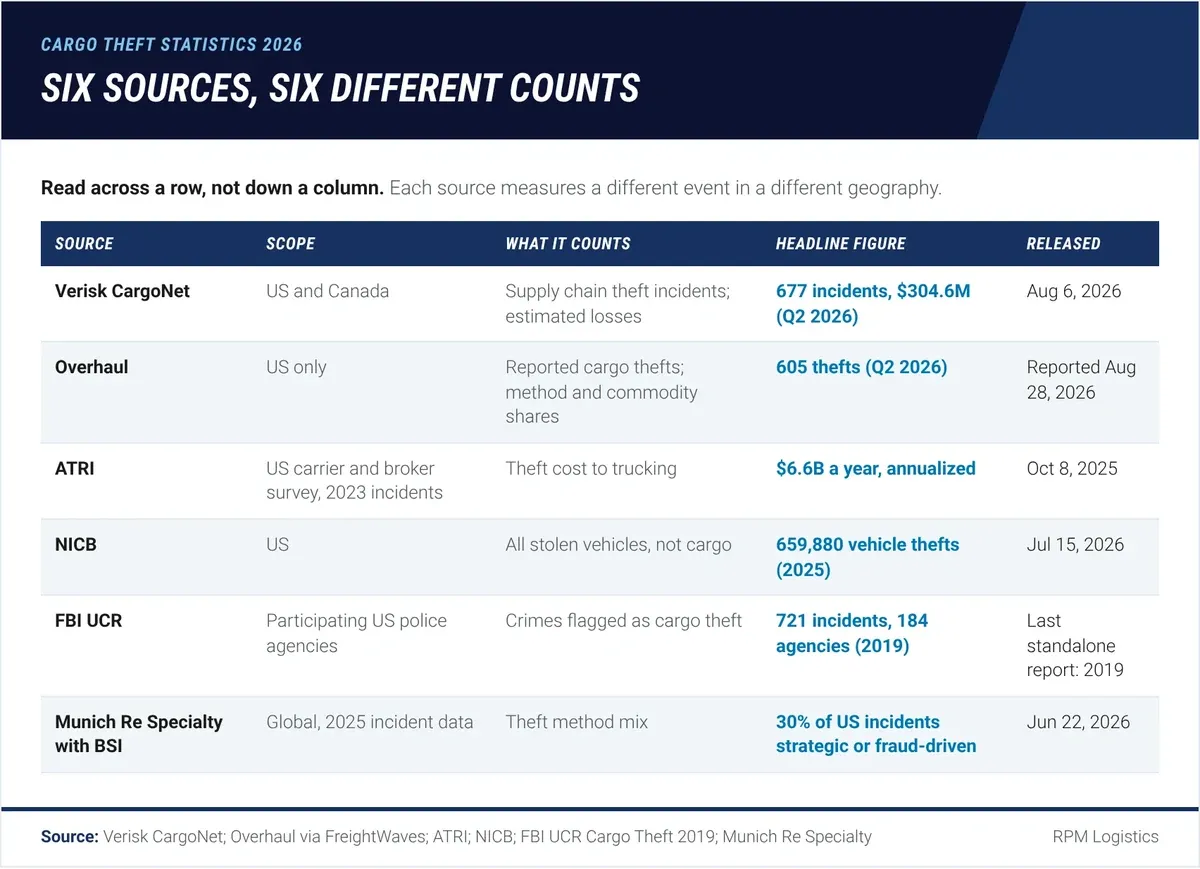
Cargo theft statistics for 2025 to mid-2026 from CargoNet, Overhaul, ATRI, NICB and the FBI, with each figure's scope, source and release date in one place.
20 Sep 2026
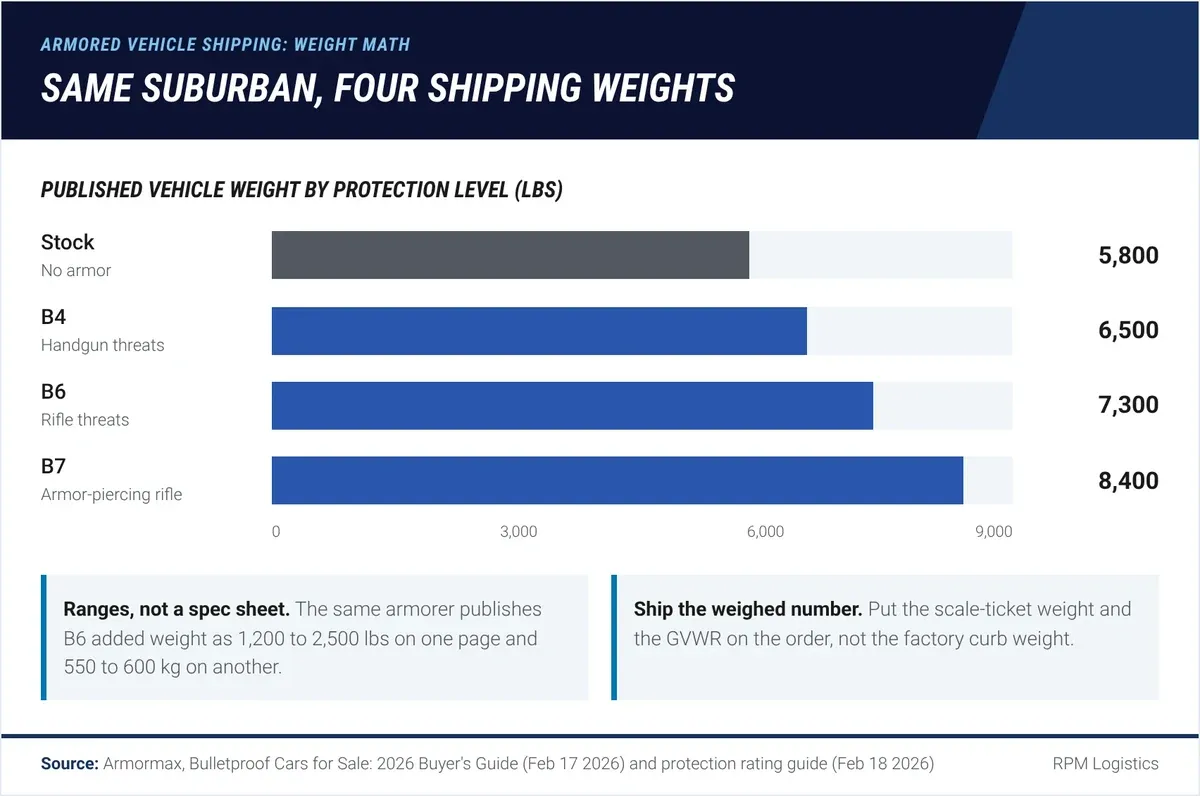
Armored vehicle shipping guide: how armor weight changes enclosed transport, when ECCN 0A606 export controls apply, and a six-step chain-of-custody protocol.
19 Sep 2026
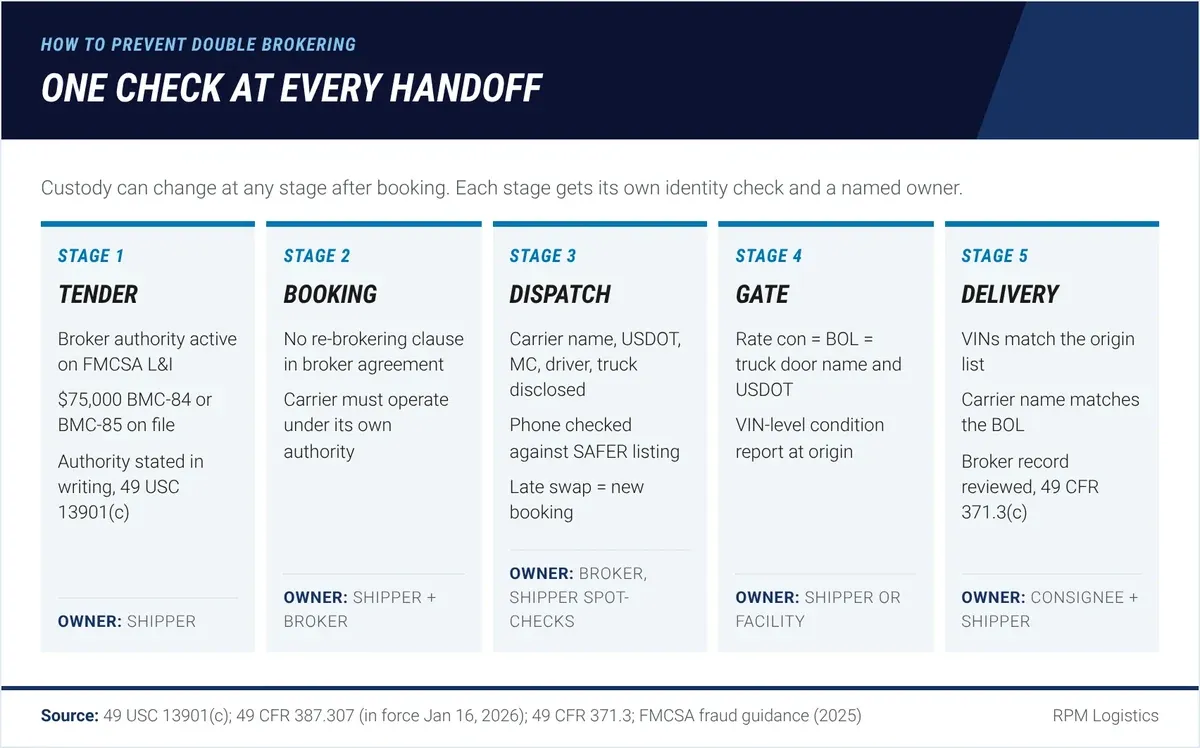
How to prevent double brokering on vehicle shipments: 8 shipper checks covering broker authority, BMC-84 bonds, contract terms, gate name matching and VINs.
16 Sep 2026
Incidents are falling while losses per theft have roughly doubled. A threat-to-countermeasure matrix with ownership assigned to each control, a cost-versus-exposure argument, and a 60-minute recovery protocol.
05 Sep 2026
Topics include cargo theft, double brokering, fictitious pickups and freight fraud. Guides explain where losses concentrate. They also cover the controls shippers can use at booking, at the gate and in transit.
Compliance guides cover choosing who moves your load. They explain DOT and FMCSA carrier checks, safety ratings, and broker versus carrier responsibilities. Others cover VIN verification and title jumping.
When something does go wrong, the claims and OS&D guides explain how losses and damage are documented and resolved.
Statistics and annual updates show how theft and fraud patterns are changing. Use them to review your controls against current risks. Several guides are written for the person at the dock or front desk, with checklists for when a driver arrives.
Start with the featured guides below, or browse the newest articles.
RPM North America
205 Hamilton Row, Suite 200,
Birmingham, MI 48009
+1 855 585 1910